Create Account
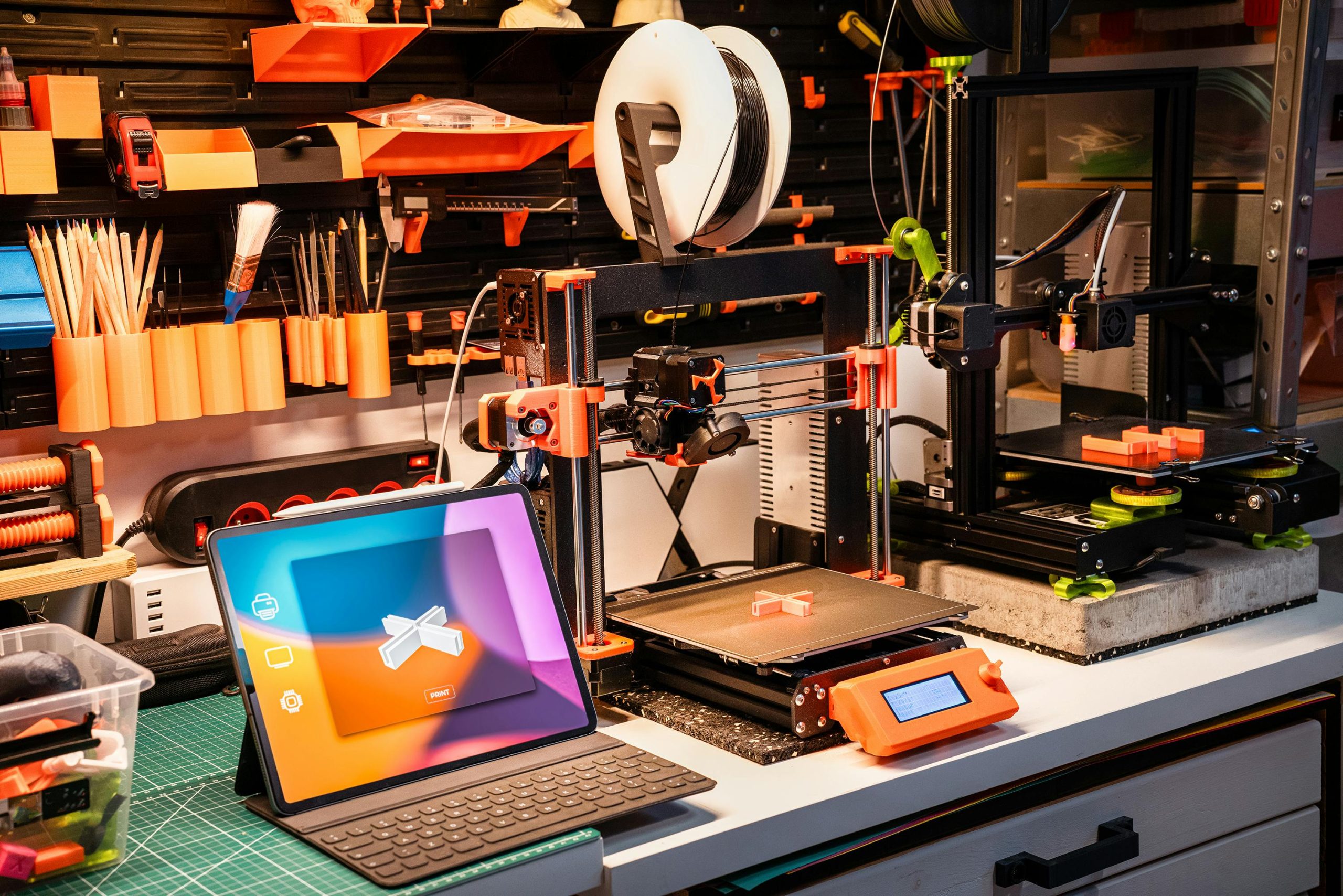
Over the last decade, 3D printing has evolved from a niche technology used primarily for prototyping into a transformative force reshaping industries, innovation, and creativity. Often referred to as additive manufacturing, 3D printing builds objects layer by layer from digital designs, enabling unprecedented flexibility and customization. Whether in healthcare, aerospace, fashion, or education, 3D printers are democratizing production and accelerating the pace of invention.
At its core, 3D printing is about turning ideas into physical objects without the constraints of traditional manufacturing processes. Unlike subtractive methods such as milling or carving, which remove material to create a shape, 3D printing adds material precisely where it is needed. This approach reduces waste, lowers costs, and allows complex geometries that were once impossible or prohibitively expensive.
One of the earliest applications of 3D printing was rapid prototyping—allowing designers and engineers to quickly create and test parts without long lead times or expensive tooling. However, recent advances in printer speed, materials, and precision have expanded its use far beyond prototypes. Today, entire production runs of components can be printed with quality comparable to conventional methods.
The technology is versatile, with various types of printers suited to different needs. Fused Deposition Modeling (FDM) printers, which melt and extrude plastic filament, are among the most common and affordable, making them popular for hobbyists and educational settings. Stereolithography (SLA) uses ultraviolet light to cure resin, offering high resolution and smooth surface finishes ideal for jewelry and dental applications. Other advanced methods, such as Selective Laser Sintering (SLS) and Direct Metal Laser Sintering (DMLS), allow printing in durable polymers and metals, opening doors for aerospace and medical implants.
One of the most significant impacts of 3D printing is in healthcare. Customized prosthetics, dental implants, and even bio-printed tissues are becoming a reality. Traditional prosthetic limbs can be costly and slow to produce, often requiring multiple fittings. 3D printing enables rapid production of patient-specific devices that perfectly match anatomy, improving comfort and functionality while lowering costs. Researchers are also exploring bioprinting—layering living cells to create tissues or organs—which could revolutionize transplant medicine in the coming decades.
In aerospace and automotive industries, the ability to print lightweight, complex parts is a game changer. Components with internal lattice structures reduce weight without sacrificing strength, enhancing fuel efficiency and performance. Companies like Boeing and Airbus are already integrating 3D printed parts into their aircraft, while automakers use the technology to accelerate design cycles and produce specialized tools and fixtures.
The fashion and design sectors are also experimenting with 3D printing to create unique garments, accessories, and footwear. Designers can push creative boundaries with intricate patterns and custom fits, producing pieces on demand that reduce inventory and waste. The ability to rapidly iterate designs supports a more sustainable and personalized fashion industry.
Education has embraced 3D printers as powerful tools for hands-on learning. From engineering students building mechanical models to art classes exploring sculpture, 3D printing fosters creativity, problem solving, and STEM skills. Schools and libraries increasingly provide access to printers, helping prepare the next generation for careers in technology and manufacturing.
Despite its many benefits, 3D printing also faces challenges. Material limitations, print speed, and quality consistency remain areas of active development. While plastic printing is widely accessible, metal and composite materials are more complex and expensive, limiting their use outside specialized fields. Additionally, intellectual property concerns arise as digital designs can be easily shared and reproduced, requiring new approaches to licensing and protection.
The environmental impact of 3D printing is mixed. On one hand, additive manufacturing reduces material waste compared to subtractive processes, and on-demand production can lower the need for large inventories and transportation. On the other hand, many 3D printing materials are petroleum-based plastics, raising questions about recyclability and end-of-life disposal. Efforts to develop biodegradable and recycled filaments, as well as closed-loop recycling systems, are gaining momentum.
Looking ahead, the future of 3D printing is promising and multifaceted. Advances in multi-material printing, speed improvements, and increased automation will enable more industries to adopt additive manufacturing. Integration with artificial intelligence and the Internet of Things (IoT) could lead to “smart” printers that optimize processes and quality autonomously. Furthermore, as costs decrease, 3D printing is expected to penetrate new markets, including small-scale manufacturing in remote areas and customized consumer goods.
The rise of 3D printing is also inspiring new business models. Instead of mass production, companies can offer mass customization, where products are tailored to individual preferences at scale. Digital marketplaces for 3D designs are flourishing, enabling designers worldwide to sell printable models directly to consumers or manufacturers. This decentralization of production holds the potential to reshape global supply chains and empower local innovation.
In conclusion, 3D printing is more than just a technological innovation—it represents a fundamental shift in how we create, produce, and consume. Its ability to bridge the gap between digital design and physical reality is unlocking new possibilities across industries and disciplines. While challenges remain, the trajectory of 3D printing points toward a future where manufacturing is more agile, accessible, and sustainable. Whether you’re a hobbyist printing your first model, an engineer crafting aerospace parts, or a healthcare professional developing personalized implants, 3D printing is redefining the boundaries of what’s possible.