Create Account
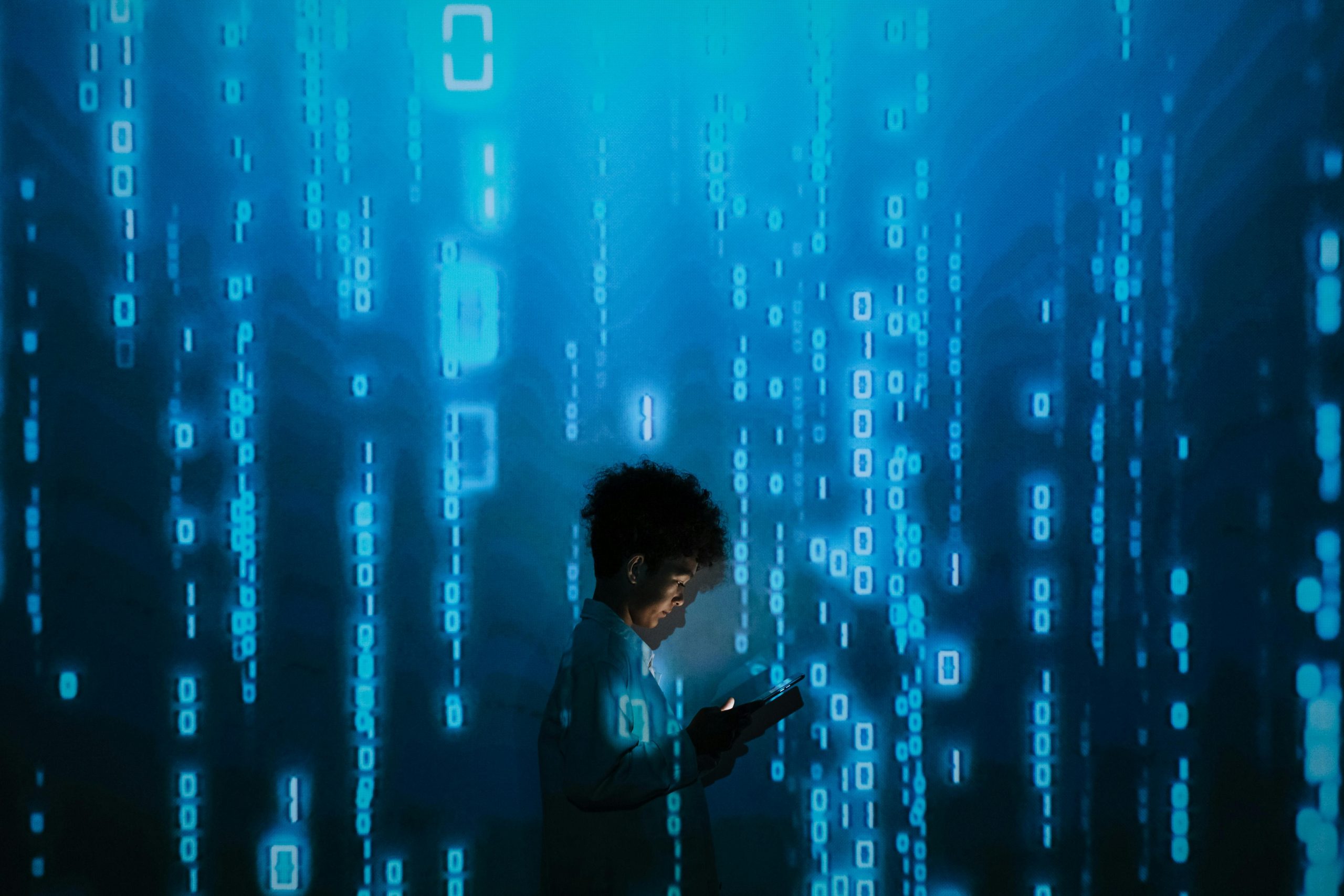
Imagine waking up one day to find that your world has subtly shifted—not because the sky changed color or a new technology appeared overnight, but because something invisible began shaping the very fabric of your daily life. This invisible force is artificial intelligence, or AI, a phenomenon that is no longer just a futuristic concept but a pervasive presence, quietly weaving itself into the routines, decisions, and even the dreams of billions of people. From the way your phone predicts your next word, to how social media curates your feed, to how doctors diagnose illnesses with startling precision, AI is transforming the world in profound and sometimes unsettling ways. Yet, beyond the headlines about self-driving cars or fear of robot overlords, AI invites us to reflect on what it truly means to be human in a world where machines can think, learn, and sometimes create.
Artificial intelligence is often portrayed as a cold, mechanical intellect—an alien intelligence devoid of empathy or soul. But that image misses a deeper truth: AI is, at its core, a human creation. It is a mirror crafted from our collective knowledge, biases, hopes, and fears. As AI learns from vast troves of data generated by human behavior, it echoes back aspects of ourselves, forcing us to confront both our greatness and our imperfections. Far from replacing human creativity or insight, AI challenges us to reconsider how we think, how we work, and how we connect. It asks us to imagine new possibilities for collaboration between minds and machines, but also demands that we wrestle with ethical dilemmas and social transformations that will shape generations to come.
Artificial intelligence, in its simplest form, is about creating systems that can perform tasks that would normally require human intelligence. This includes recognizing patterns, understanding language, making decisions, and even generating original content. The journey toward AI began decades ago, rooted in a dream to build machines that could “think.” Early pioneers imagined logic-driven computers that could solve problems like a chess player or a mathematician. These early systems worked well in narrow domains but struggled with the complexities and unpredictability of real-world scenarios. The breakthrough came with machine learning—a paradigm shift where instead of programming explicit instructions, computers learn from examples. The rise of deep learning, inspired by the brain’s neural networks, propelled AI into a new era, enabling it to analyze images, translate languages, and understand speech with remarkable accuracy.
Yet, despite this impressive progress, AI remains fundamentally different from human intelligence. Machines do not possess consciousness, emotions, or self-awareness. They operate by recognizing statistical patterns, not by understanding meaning as humans do. When an AI writes a poem or paints a picture, it does so by remixing patterns from its training data rather than drawing from lived experience or emotional insight. This distinction is critical because it highlights AI’s role as a tool—a sophisticated, powerful, and sometimes surprising tool—but not a replacement for human wisdom or empathy.
One of the most fascinating aspects of AI’s rise is how it reshapes creativity. For centuries, creativity was considered a uniquely human trait, a mysterious spark of inspiration that machines could never replicate. Today, AI systems compose music, generate artwork, write stories, and even assist in scientific discovery. This challenges traditional definitions of creativity and forces us to rethink what it means to create. Is creativity solely the product of conscious intention and emotion, or can it also be the outcome of algorithms generating novel combinations? While AI can imitate styles and produce novel patterns, the meaning and value of creative work still hinge on human context, interpretation, and purpose.
The interplay between AI and work presents both opportunity and disruption. Automation driven by AI is transforming industries at an unprecedented scale. Repetitive, routine tasks are increasingly handled by machines, freeing humans to focus on higher-level problem solving and interpersonal skills. However, this transition also sparks anxiety about job displacement and economic inequality. History shows that technological revolutions often reshape labor markets in complex ways, creating new kinds of jobs even as they render others obsolete. The challenge lies in managing this change equitably—ensuring that the benefits of AI are broadly shared, and that workers are equipped with skills to thrive in new roles that emphasize creativity, critical thinking, and emotional intelligence.
Education is a frontline where AI’s influence is already being felt. Intelligent tutoring systems can personalize learning, adapt to individual needs, and provide instant feedback. This has the potential to democratize education and help close opportunity gaps. Yet, it also raises difficult questions about assessment and authorship. If AI can generate essays, solve math problems, or produce art, how do we evaluate student understanding? The role of teachers evolves from dispensers of knowledge to facilitators of critical thinking and ethical reflection. Preparing learners for a future alongside AI means cultivating skills that machines cannot replicate: empathy, judgment, curiosity, and the ability to navigate ambiguity.
Ethical considerations are central to AI’s development and deployment. Algorithms influence who gets hired, who receives loans, and who faces surveillance. They carry the biases embedded in their training data, often perpetuating or amplifying societal inequalities. This is not a flaw of AI itself but a reflection of human systems. Addressing these challenges requires transparency, accountability, and inclusivity in AI design. It means involving diverse voices in creating and regulating AI systems and being vigilant about unintended consequences. Moreover, privacy concerns loom large, as AI thrives on massive datasets that include personal information. Striking the balance between innovation and individual rights is a defining challenge of the AI era.
The idea of autonomous AI, capable of independent decision-making without human oversight, fuels much of the public imagination—sometimes inspiring hope, sometimes fear. Popular culture’s depiction of sentient robots has shaped many dystopian narratives, but the real risks are often subtler. Overreliance on AI can erode human judgment, and opaque systems can make decisions that are difficult to challenge or understand. Ensuring meaningful human control and fostering critical engagement with AI outputs is essential to prevent abdication of responsibility.
Despite the challenges, AI offers remarkable potential to address some of humanity’s greatest problems. It can accelerate medical research, helping discover new treatments and predict disease outbreaks. It can optimize energy consumption and model climate change scenarios to inform policy. AI-powered accessibility tools empower people with disabilities to communicate and navigate the world more easily. In this sense, AI is a magnifier—capable of enhancing human ability but dependent on human values and oversight.
Perhaps the most profound impact of AI is how it challenges our self-understanding. As machines master tasks once thought exclusive to humans, from language comprehension to visual recognition, we are pushed to reconsider what makes us unique. Intelligence alone is no longer sufficient as a marker of humanity. Instead, qualities like compassion, creativity, ethical reasoning, and the capacity for connection emerge as more central. The future may not be one of humans versus machines, but humans with machines—collaborating in ways that amplify the best of both.
The path ahead with AI is not predetermined. It is shaped by the choices we make now—in research, policy, culture, and everyday interactions. The technology reflects our aspirations and anxieties, our biases and ideals. Engaging with AI responsibly requires humility and vigilance, imagination and empathy. It asks us to hold space for uncertainty and to design systems that prioritize human dignity and flourishing.
In the end, artificial intelligence is not a replacement for human thought or heart; it is an extension of them. It holds up a mirror to our collective knowledge and values, revealing both light and shadow. As we navigate this evolving relationship, the most important question may not be how smart machines become, but how wise we choose to be in guiding their place in our world. Because in this new age of thinking machines, the human spark—the capacity to care, to wonder, to imagine—remains our most vital asset.