Create Account
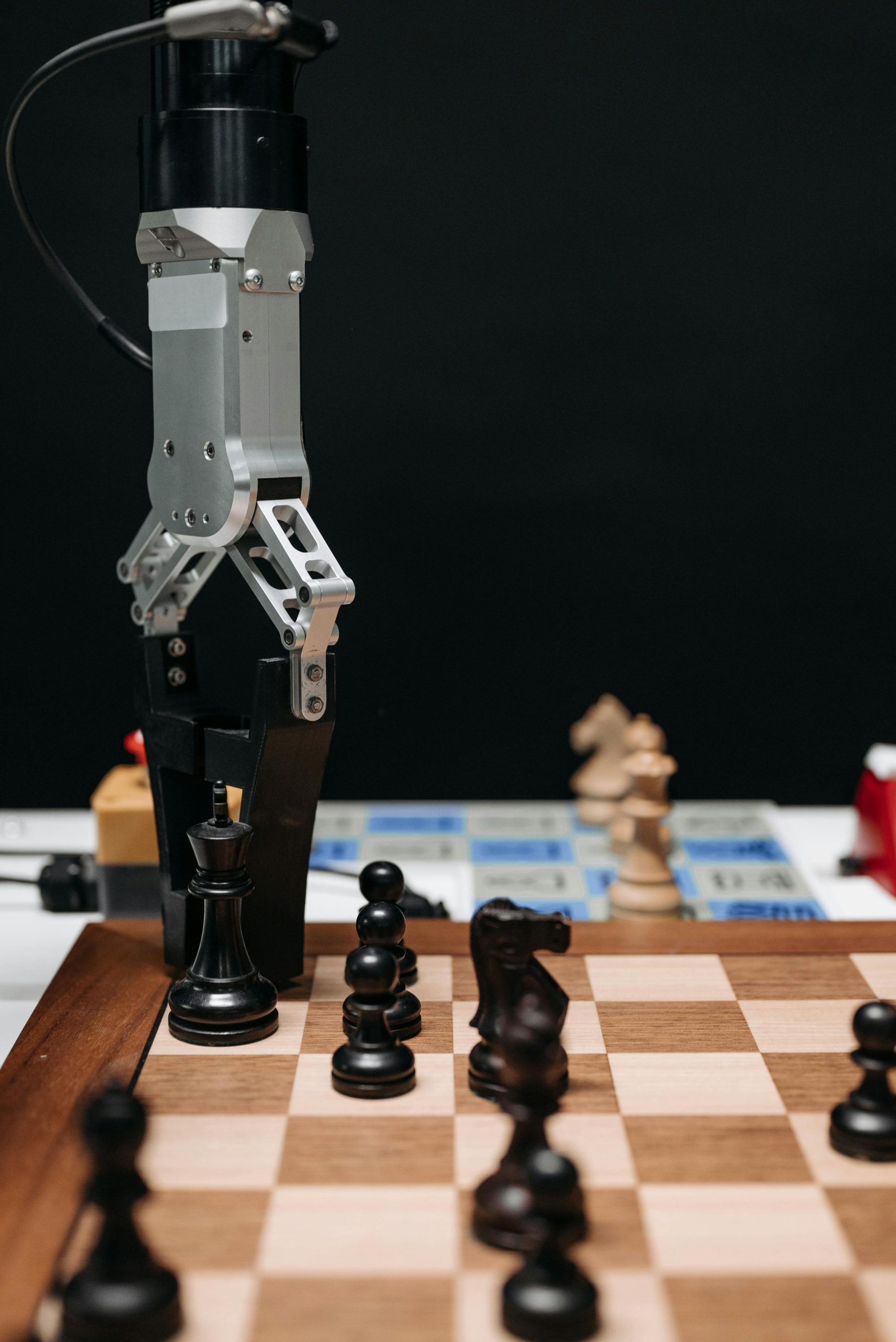
Artificial Intelligence, often abbreviated as AI, has become one of the most powerful and influential forces shaping the modern world. Yet its rise has not been marked by a single dramatic moment or loud announcement. Instead, AI has quietly woven itself into everyday life, transforming routines so gradually that many people barely notice how dependent they have become on intelligent systems. From the phones in our pockets to the decisions made in hospitals, banks, and governments, AI is no longer a futuristic concept—it is an active participant in human society.
At its most basic level, artificial intelligence refers to machines or software designed to perform tasks that normally require human intelligence. These tasks include recognizing speech, understanding language, learning from experience, solving problems, and making decisions. What sets AI apart from traditional software is its ability to improve over time. Rather than following fixed instructions, AI systems learn patterns from data and adjust their behavior accordingly. This ability to learn has allowed machines to move beyond simple automation and into domains once considered uniquely human.
The idea of intelligent machines is not new. For decades, scientists, philosophers, and storytellers have imagined a future where machines could think. Early computer scientists in the mid-20th century believed that human-level intelligence might be achieved within a few decades. That optimism faded as researchers encountered significant limitations. Computers were slow, data was scarce, and early algorithms struggled with real-world complexity. Progress stalled, leading to periods of disappointment known as AI winters, when funding and public interest declined.
What changed was not a single breakthrough, but a convergence of factors. The digital revolution generated massive amounts of data through the internet, smartphones, and connected devices. At the same time, computing power increased dramatically, making it possible to process this data at scale. Advances in machine learning, particularly deep learning, enabled systems to extract meaningful patterns from complex information such as images, speech, and text. Together, these developments reignited AI research and pushed it rapidly into practical applications.
Today, AI is embedded in everyday experiences. Recommendation algorithms influence what people watch, listen to, and buy. Search engines use AI to interpret intent and deliver relevant results. Voice assistants respond to spoken commands and manage daily tasks. Facial recognition unlocks devices and verifies identities. These systems often feel natural and effortless, which can obscure the complexity behind them. Each interaction is supported by models trained on enormous datasets, constantly updated to improve accuracy and relevance.
Beyond personal convenience, AI is transforming industries at a structural level. In healthcare, AI assists with diagnosing diseases, analyzing medical images, and predicting patient outcomes. Algorithms can identify subtle patterns in scans that might escape human eyes, enabling earlier detection of conditions such as cancer or neurological disorders. In finance, AI monitors transactions for fraud, evaluates credit risk, and automates trading strategies. Manufacturing relies on intelligent systems to optimize production, predict equipment failures, and improve quality control.
Education is also undergoing a significant shift. AI-powered learning platforms adapt lessons to individual students, offering personalized pacing and targeted feedback. Automated systems handle grading and administrative tasks, freeing educators to focus more on teaching and mentorship. While AI cannot replace human teachers, it has the potential to reduce inequalities in access to education and support lifelong learning in a rapidly changing job market.
One of the most surprising developments in AI has been its entry into creative fields. Machines can now generate music, write stories, design graphics, and produce videos. These capabilities challenge long-held beliefs about creativity as an exclusively human trait. Rather than eliminating artists, AI is increasingly used as a creative partner, helping generate ideas, explore variations, and accelerate production. This collaboration raises important questions about originality, authorship, and the value of human expression in an age where machines can mimic creative output.
Despite its promise, AI also introduces serious ethical and social concerns. One of the most significant issues is bias. Because AI systems learn from historical data, they can inherit and amplify existing inequalities. If biased data is used to train models, the outcomes may unfairly disadvantage certain groups. This is particularly troubling in high-stakes areas such as hiring, criminal justice, lending, and healthcare. Addressing bias requires careful data selection, transparent model design, and continuous oversight.
Privacy is another major concern. AI systems often rely on extensive personal data, including location, behavior, preferences, and biometric information. While this data enables personalized services, it also increases the risk of surveillance, misuse, and unauthorized access. The balance between innovation and individual privacy is delicate, and societies are still struggling to define appropriate boundaries. Regulations, ethical standards, and informed public consent all play a role in shaping how data is collected and used.
The impact of AI on employment has sparked widespread debate. Automation powered by AI threatens to replace certain jobs, especially those involving repetitive or predictable tasks. At the same time, AI is creating new roles that require skills in data analysis, system design, ethics, and human-AI collaboration. The challenge lies in managing the transition. Workers may need to reskill or adapt, and institutions must support this shift through education, training, and social safety nets.
Another important issue is control. As AI systems become more autonomous and complex, understanding how they make decisions becomes more difficult. This lack of transparency can erode trust, especially when AI influences critical outcomes. Researchers are working on methods to make AI systems more interpretable and aligned with human values. Ensuring that machines act in ways that are understandable, predictable, and ethical is one of the most important challenges of AI development.
AI is also accelerating scientific discovery. Machine learning models help analyze vast datasets in fields such as genomics, climate science, and physics. In medicine, AI speeds up drug discovery by predicting how molecules will interact, potentially reducing the time needed to develop new treatments. In environmental research, AI helps model climate systems, forecast extreme weather events, and optimize energy usage. These applications show how AI can extend human intellect rather than replace it.
On a global scale, AI has become a strategic priority for governments. Nations invest heavily in AI research to gain economic and technological advantages. This competition drives innovation but also raises concerns about inequality, misuse, and military applications. The use of AI in surveillance, cyber warfare, and autonomous weapons highlights the need for international cooperation and ethical guidelines. Without shared norms, the risks of misuse may outweigh the benefits.
Looking ahead, the future of AI is uncertain but undeniably influential. Systems are becoming more capable, more integrated, and more autonomous. As this happens, society must decide how much control to delegate to machines and under what conditions. The choices made today will shape how AI affects future generations. Whether AI becomes a tool for empowerment or a source of division depends largely on human decisions, not technological inevitability.
AI also forces humanity to reflect on itself. By attempting to replicate intelligence, humans are compelled to define what intelligence truly means. Is it logic, creativity, empathy, consciousness, or something else entirely? AI can simulate aspects of these qualities, but it also exposes their complexity. In doing so, it highlights the uniquely human ability to assign meaning, values, and purpose beyond computation.
Rather than viewing AI as a rival, it may be more useful to see it as a mirror and a multiplier. It reflects human data, behavior, and assumptions, magnifying both strengths and flaws. Used responsibly, AI can enhance productivity, creativity, and understanding. Used carelessly, it can deepen inequalities and erode trust. Responsibility, therefore, lies not with the machines, but with those who design and deploy them.
In the end, artificial intelligence is not just a technological revolution; it is a social one. It challenges how people work, learn, create, and relate to one another. It forces difficult conversations about ethics, power, and identity. Most importantly, it reminds us that progress is not solely about what machines can do, but about how humans choose to use them. As machines begin to think back, the real question is whether humanity is prepared to think more deeply about itself.