Create Account
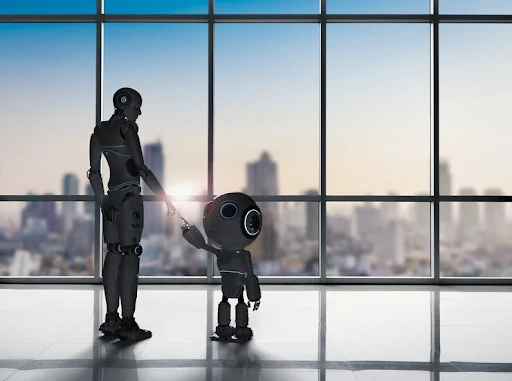
Artificial intelligence is often discussed through dramatic headlines about robots, job replacement, and futuristic technology. Yet the biggest workplace transformation in 2026 is happening much more quietly. Instead of suddenly replacing entire professions, AI is increasingly becoming embedded into everyday workflows, changing how people work one task at a time.
For many employees, the shift is almost invisible. They may not think of themselves as using artificial intelligence, yet AI-powered systems are already helping draft emails, summarize meetings, organize schedules, analyze data, manage customer support requests, and streamline administrative work.
This gradual integration is what makes the change so significant. Rather than arriving as a single disruptive event, AI is becoming part of the digital infrastructure people interact with every day. In many cases, workers are benefiting from automation without even noticing how much of their routine has already been influenced by machine learning systems.
One of the most common workplace applications involves repetitive tasks. Activities that once required manual sorting, scheduling, formatting, or data entry can now be completed more efficiently through AI-assisted tools. This allows employees to spend less time on administrative work and more time on decision-making, communication, and creative problem-solving.
The transformation is especially visible in office environments. AI systems can generate summaries from long documents, identify patterns within large datasets, create first drafts of reports, and assist with project management. These capabilities reduce the time required for tasks that previously consumed significant portions of the workday.
Customer service is another area experiencing rapid change. Many businesses now use AI-powered systems to handle routine inquiries, route support tickets, and provide instant responses to common questions. Human employees remain essential for complex issues, but automation increasingly manages the first layer of interaction.
Communication workflows are also evolving. AI tools can assist with writing, editing, translation, transcription, and meeting documentation. As a result, information moves more quickly through organizations, reducing delays and improving accessibility across teams.
Importantly, AI is not only affecting technology-focused industries. Healthcare, education, finance, retail, logistics, marketing, and manufacturing are all adopting automation tools that improve efficiency in different ways. The impact is broad because the technology is increasingly integrated into existing software rather than functioning as a separate system.
This shift has also changed expectations around productivity. Employees are often expected to manage larger workloads because routine tasks require less manual effort. While automation can improve efficiency, it can also create pressure to maintain higher output levels if organizations fail to balance technological gains with realistic workloads.
Another significant change involves skill development. As AI handles more repetitive functions, demand is increasing for skills that machines struggle to replicate effectively, including critical thinking, relationship-building, adaptability, leadership, and complex decision-making. Technical literacy is also becoming increasingly valuable across industries.
At the same time, concerns about job displacement remain part of the conversation. While many experts believe AI will transform jobs more often than eliminate them entirely, certain tasks are clearly becoming automated. This means workers and organizations must continuously adapt as technology evolves.
The long-term impact of AI will likely depend on how businesses implement it. Used effectively, automation can support employees by reducing repetitive work and improving efficiency. Used poorly, it can create uncertainty, increased pressure, or reduced opportunities for skill development.
What makes this moment unique is the pace of adoption. Unlike previous workplace technologies that required major operational changes, modern AI systems are often added directly into existing platforms and software. This allows transformation to occur gradually but continuously.
Ultimately, “How AI Is Quietly Changing The Workplace” reflects a defining reality of 2026: artificial intelligence is no longer a future concept. It is becoming part of everyday work, reshaping tasks, workflows, and expectations in subtle ways that are already influencing how millions of people perform their jobs.
References
- World Economic Forum – Future of Work
- McKinsey & Company – Generative AI Insights
- Harvard Business Review – Artificial Intelligence in the Workplace
- MIT Sloan Management Review – AI & Business Strategy
- Stanford Human-Centered AI Institute (HAI)
- OECD – AI and Employment Research
- Brookings Institution – Technology and Labor Markets