Create Account
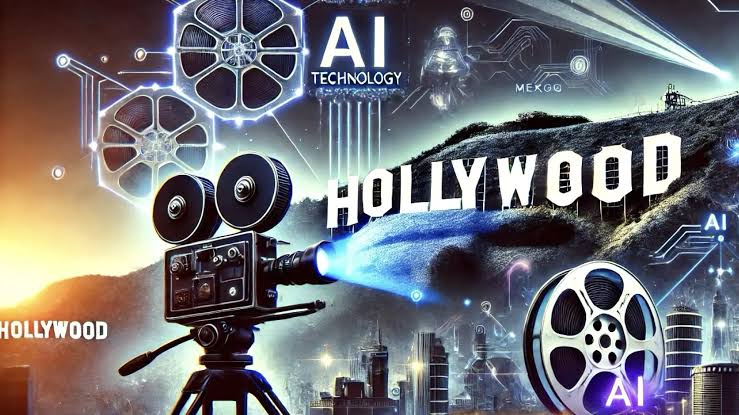
Hollywood is entering an era in which filmmaking is no longer defined only by cameras, physical sets and traditional post-production. Artificial intelligence, virtual production, real-time rendering and increasingly sophisticated digital tools are becoming part of the production pipeline, changing how stories can be developed, filmed and finished. Industry research shows that AI is already being explored across everything from storyboarding and visualization to virtual production, editing, sound and post-production, although the long-term effect on the industry is still developing.
Virtual production is one of the clearest examples of that shift. LED volumes and real-time digital environments allow filmmakers to create locations and visual worlds around performers without relying entirely on traditional physical sets or traveling to multiple locations. The next step is increasingly connecting those systems with AI, allowing digital environments, visual effects and production workflows to interact more dynamically. At IBC2026, industry professionals described the combination of performance capture, LED virtual production and generative AI as a unified production pipeline capable of reducing handoffs between different stages of filmmaking.
AI is also moving beyond experimental demonstrations and into practical production conversations. In 2026, filmmakers and studios are exploring tools that can accelerate pre-production, generate visual concepts, assist with post-production and create digital environments. A recent Variety report highlighted a growing group of technology companies developing tools specifically aimed at Hollywood, demonstrating how the entertainment industry is becoming an increasingly important market for AI developers.
That growing relationship between Hollywood and technology companies is particularly significant. Entertainment companies are no longer simply purchasing software from outside vendors; technology businesses are increasingly becoming participants in the creative ecosystem itself. Deloitte’s 2026 Media and Entertainment Industry Outlook notes that technology companies have already evolved into major media businesses and that generative AI is lowering barriers to content creation while accelerating parts of the production pipeline.
The result could be a major change in how productions are organized. Instead of completing every stage separately — writing, pre-visualization, physical production, visual effects and editing — newer workflows can connect those stages digitally. That means filmmakers can potentially experiment with environments, shots and visual ideas much earlier, make changes faster and carry digital assets through multiple stages of production.
There are already real-world examples of filmmakers experimenting with this approach. The Los Angeles Times reported on director Jon Erwin’s use of AI alongside LED-volume production for The Old Stories: Moses, allowing a production that traditionally could have required multiple locations and months of work to be filmed on a Los Angeles soundstage in a much shorter period. The example illustrates how AI and virtual production can work together rather than functioning as completely separate technologies.
The transformation is not simply about making movies faster, either. It could change what kinds of stories become financially possible. Digital environments can reduce the need to physically construct enormous locations, while AI-assisted tools can help smaller teams experiment with visual concepts that once required much larger production resources. Deloitte similarly notes that generative AI is lowering barriers to content creation for creators and smaller studios, potentially allowing more people to produce sophisticated visual work.
At the same time, the technology is bringing complicated questions about creative ownership, intellectual property, labor and the role of human performers. Hollywood’s relationship with AI remains contested, and recent industry deals are beginning to establish rules around how studios can use the technology. The conversation is therefore shifting from whether AI will enter entertainment to how it should be integrated into an industry built around human creativity.
Technology companies are becoming part of that conversation in an increasingly visible way. Microsoft’s recent discussion of AI in media and entertainment, for example, emphasizes how organizations are looking beyond experimentation toward measurable uses across creative and business workflows. Disney has also expanded its technology leadership, appointing its first chief technology officer in September 2026 as the company places greater emphasis on AI, digital platforms and engineering.
The next era of Hollywood may therefore look less like a battle between filmmakers and technology and more like an evolving partnership between the two. Cameras, actors, writers, designers and crews remain central to production, but they are increasingly working alongside digital environments and AI-assisted tools. The most important technological change may ultimately be the creation of workflows where those elements operate together.
Hollywood has always been shaped by new technology, from sound and color to computer-generated imagery and digital cameras. AI and virtual production are simply the newest chapters in that history. What makes this moment different is the speed at which multiple technologies are converging at once — and the fact that the companies building those technologies are becoming increasingly involved in the entertainment business itself.
The screen may still look familiar when the lights go down, but behind it, the machinery creating Hollywood’s next generation of stories is becoming far more digital.
References
- Deloitte — 2026 Media and Entertainment Industry Outlook
- McKinsey — What AI Could Mean for Film and TV Production
- IBC2026 — Real-Time Hybrid Filmmaking
- Variety — The Old & New Hollywood Guard Wielding AI’s Might
- Los Angeles Times — How AI Could Change Hollywood Film Production
- Microsoft — How AI Is Transforming Media and Entertainment