Create Account
For years, artificial intelligence in Hollywood was discussed as if it belonged to the future. Filmmakers experimented with AI-generated imagery, studios explored automated production tools, actors and writers debated what the technology could eventually mean for their professions, and audiences wondered whether artificial intelligence would ever become a genuine part of mainstream entertainment. That future has arrived faster than many expected. AI is no longer sitting on the edge of Hollywood waiting to be tested. It is increasingly becoming part of the production conversation itself. From visual development and pre-production to editing, localization, marketing and post-production, artificial intelligence is moving deeper into the filmmaking pipeline. The most important question is therefore changing. Hollywood is no longer simply asking whether AI can be used. It is asking how much of the creative process AI should participate in, who gets to control it and what happens to the people whose jobs are being reshaped along the way.
The change is particularly significant because modern filmmaking is already heavily dependent on technology. Digital cameras, computer-generated imagery, virtual production, motion capture, non-linear editing and sophisticated visual-effects software have transformed filmmaking over decades. AI represents another stage in that evolution, but its capabilities are different. Instead of simply giving filmmakers a faster digital version of an existing tool, generative AI can produce new images, sounds, text and other forms of content based on prompts or existing material. That means the technology is beginning to participate in areas that were historically associated with human creative decision-making. The result is both exciting and unsettling.
One of the clearest areas of development is visual creation. Filmmakers can increasingly use AI-assisted tools to explore concepts before committing significant resources to production. A director or production designer can experiment with environments, costumes, lighting approaches and visual compositions during early development. Instead of spending days producing a single concept illustration, a creative team can rapidly explore dozens of possibilities. This does not necessarily mean the AI-generated image becomes the final image. Often, its value is in helping humans decide what the final image should look like. AI can function as a rapid visual brainstorming partner, allowing creative teams to move through possibilities at a speed that was previously difficult to achieve.
The same principle applies to pre-production. Storyboarding, location visualization and mood development can all benefit from AI-assisted workflows. A filmmaker can test how a scene might look in different environments or experiment with different visual tones before a camera ever rolls. For independent filmmakers in particular, that could be significant. Production resources are limited, and anything that allows a small team to communicate an idea more efficiently could reduce some of the barriers associated with filmmaking. AI therefore has the potential to make certain creative processes more accessible, particularly for creators who do not have access to large studio departments.
But accessibility comes with complications.
The creative industries are built around human labor, specialized skills and years of professional experience. Concept artists, illustrators, editors, visual-effects artists, translators, voice performers and other specialists have developed careers around tasks that AI systems can increasingly assist with or automate. The question is not simply whether AI can perform part of a task. It is whether the industry will continue to pay humans to perform that task at the same scale once an automated alternative becomes available.
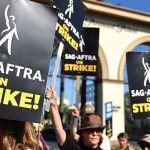
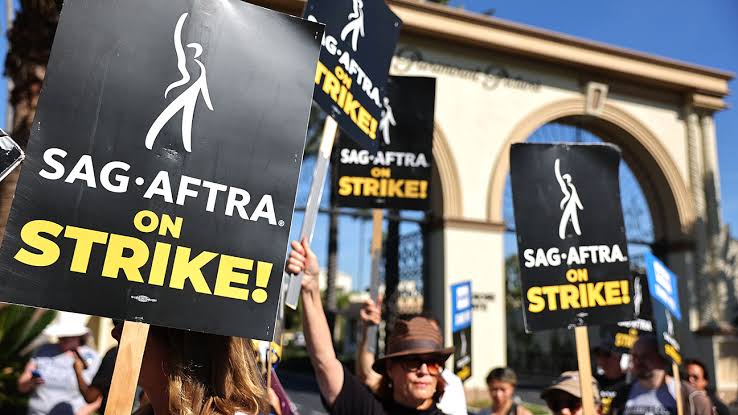
That concern has already become part of Hollywood’s labor conversation. During the 2023 strikes, both the Writers Guild of America and SAG-AFTRA addressed artificial intelligence as part of broader negotiations over how emerging technologies could affect creative workers. The agreements that followed established protections and rules around the use of AI, including provisions concerning writers’ material and performers’ digital replicas. Those negotiations demonstrated that AI was no longer a theoretical issue for Hollywood workers. It had become a workplace issue.
The performers’ side of the conversation is particularly complicated because artificial intelligence can potentially replicate aspects of a person’s appearance or voice. Digital replicas can have legitimate creative uses. A performer may want a digital double for a stunt, de-aging sequence or complicated visual-effects shot. A production may use technology to create a character that could not otherwise be physically filmed. But the same technology raises questions about consent, compensation and control. If a person’s likeness can be digitally reproduced, who owns the right to use that representation? How long can it be used? What happens if the technology produces a performance the person never actually gave?
These questions become even more important as synthetic media improves.
Voice generation is another area where the boundary between assistance and replacement is becoming less clear. AI-generated voices can be used for temporary dialogue, localization, accessibility and production experimentation. In some circumstances, synthetic voices may help creators work more efficiently. But performers have legitimate concerns about their voices being replicated or used beyond the terms they originally agreed to. A voice is not simply a technical sound file. For many performers, it is part of their professional identity.
Hollywood is also confronting the issue of copyright and training data. Generative AI systems are trained on enormous amounts of material, creating ongoing debates about what kinds of creative works can be used to train models and under what conditions. The U.S. Copyright Office has been examining these questions through its multi-part initiative on artificial intelligence, including issues involving digital replicas, copyrightability and the use of copyrighted works in AI training.
This matters because entertainment is fundamentally built on intellectual property. Movies, television shows, scripts, music, performances, photographs and artwork all represent creative assets. If AI systems are trained on existing creative material, creators and rights holders want to know how their work is being used and whether they should receive compensation. At the same time, technology companies argue that machine learning requires large datasets and that existing copyright principles may not always translate neatly to artificial intelligence.
Hollywood therefore finds itself at the center of a much larger technological debate.
There is also a practical side to the AI revolution that receives less attention because it is less dramatic. Not every use of AI in entertainment involves generating a digital actor or creating an entire movie. Many applications are much more ordinary. AI can help organize production information, search through footage, generate preliminary transcripts, assist with editing workflows, translate material, create subtitles, support marketing teams and help producers manage large amounts of information. These uses may not produce viral headlines, but they could have a significant effect on how entertainment companies operate.
That is why the phrase “AI in Hollywood” can sometimes be misleading. There is no single AI revolution happening inside the industry. There are dozens of smaller technological changes happening simultaneously.
Some are visible to audiences. Others are almost completely invisible.
A viewer may notice an AI-assisted visual effect or a digitally generated character. They are less likely to notice that AI helped organize production documents, generate initial marketing concepts or accelerate localization. Yet those behind-the-scenes applications could eventually have just as much impact on employment and production structures as the more spectacular examples.
The technology is also changing the economics of creativity.
Large studios have traditionally had access to expensive equipment, specialized departments and enormous production budgets. AI could lower the cost of certain creative tasks, potentially allowing smaller studios and independent creators to produce work that previously required significantly more resources. A small production team may be able to create sophisticated concept art, preliminary visual effects or localized promotional material without maintaining a large department for every function.
That could be empowering.
It could also create new competition.
If the cost of producing certain creative assets falls dramatically, the amount of content entering the market could increase. More creators may be able to make films, series, advertisements and digital entertainment. But audiences have limited time. More production does not automatically mean more attention. In fact, it could make attention even harder to capture.
This creates an interesting paradox. AI may make content creation easier while making successful storytelling more difficult.
When everyone has access to powerful production tools, technology itself becomes less of a competitive advantage. The differentiator becomes the quality of the idea, the strength of the story, the originality of the perspective and the ability to connect with an audience. AI can help produce an image, but it does not automatically know why an audience should care about the story surrounding that image.
That distinction may ultimately determine how Hollywood uses the technology.
The strongest future applications of AI may not involve replacing filmmakers. They may involve giving filmmakers more options. A director can use AI to explore an idea, but still decide which version has emotional meaning. An editor can use AI to locate footage faster, but still determine which performance belongs in the final cut. A writer can use AI for research or brainstorming, but still shape the voice, characters and themes that make a script distinctive.
In that model, AI becomes infrastructure rather than authorship.
But the industry will need rules to make that model sustainable.
Consent, transparency, compensation and attribution are likely to remain central issues. Creative workers need to understand when AI is being used and how their work or likeness may be incorporated into automated systems. Studios need clear policies for protecting intellectual property. Audiences may increasingly want to know whether something they are watching was created entirely by humans, partially generated by AI or heavily dependent on synthetic performances.
There is also a cultural question that cannot be answered by technology alone: what does audiences’ growing familiarity with AI-generated entertainment mean for the value they place on human performance?
A human actor brings biography, physical presence, unpredictability and lived experience to a role. A human writer draws from observation, memory, emotion and culture. A human filmmaker brings a personal interpretation of the world. Those qualities are difficult to reduce to technical specifications. AI can imitate patterns, but imitation is not necessarily the same thing as lived experience.
That may be why the future of Hollywood will probably not be defined by a simple battle between humans and machines.
Instead, it will be defined by collaboration, competition and negotiation.
Some creative professionals will use AI as another tool in their workflow. Others may avoid it. Some roles will change substantially. New roles may emerge around AI supervision, digital asset management, synthetic-media production, rights management and verification. Studios will experiment with new production models while unions and lawmakers attempt to establish boundaries.
The industry will not figure everything out at once.
There will be successful experiments and failures. Some AI-generated entertainment may feel innovative, while other projects may feel hollow. Some automated tools will genuinely improve creative workflows. Others may create new problems that outweigh their benefits. The technology itself will continue evolving, making today’s debates only the beginning.
What is already clear is that AI has crossed an important threshold.
Hollywood is no longer treating artificial intelligence as a futuristic curiosity that might someday transform entertainment. It is becoming part of the industry’s present tense. The conversations happening in writers’ rooms, production offices, visual-effects departments, studios, unions and legal teams are increasingly about implementation rather than possibility.
That means the next phase of the AI conversation will be less about asking whether the technology works and more about deciding what it should be allowed to do.
Who gets credit?
Who gets paid?
Who gives permission?
Who owns the resulting work?
And where does the human creator fit into the process?
Those questions will shape the entertainment industry long after the novelty of AI-generated images and videos has disappeared.
Hollywood’s AI experiment is no longer an experiment because the technology has already entered the workflow. The real experiment now is figuring out how an industry built on human creativity can adapt without losing the very thing that made its work valuable in the first place.
The technology is here.
Now Hollywood has to decide what it wants to do with it.
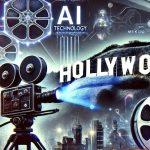
Caption: Hollywood isn’t waiting for the AI future anymore. It’s already building it.
References
SAG-AFTRA — Artificial Intelligence and Digital Replicas
Writers Guild of America — 2023 MBA and AI Provisions
U.S. Copyright Office — Copyright and Artificial Intelligence
U.S. Copyright Office — Copyright and Artificial Intelligence: Part 1, Digital Replicas