Create Account

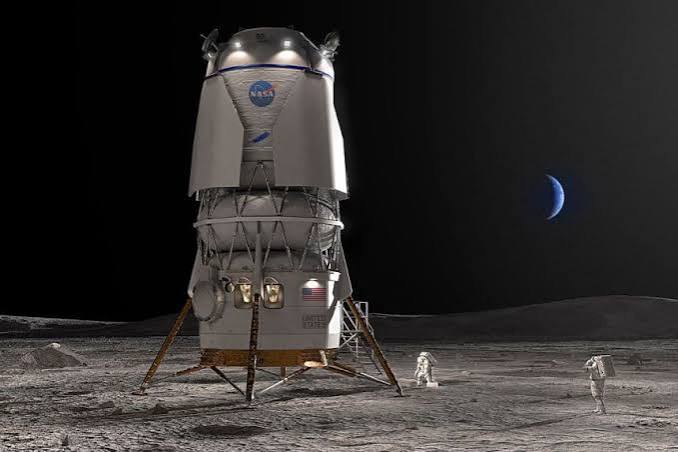
For decades, returning astronauts to the Moon has been one of the biggest challenges in human space exploration. Getting there requires more than a powerful rocket. Multiple spacecraft must operate together, astronauts must transfer safely between vehicles, and a lunar lander must descend to the surface and bring its crew back to orbit.
Every part of that journey has to work.
That is why NASA’s latest Artemis strategy places a major test mission between its earlier lunar exploration flights and the next planned crewed Moon landing. Announced on October 23, 2026, the revised plan calls for Artemis III to launch in 2027 and conduct important spacecraft rendezvous and docking demonstrations in low Earth orbit. The broader objective is to build experience and reduce technical risks ahead of planned crewed lunar landing missions in 2028.
Rather than immediately attempting a landing, astronauts will practice connecting NASA’s Orion spacecraft with test versions of lunar landers developed by Blue Origin and SpaceX. The mission is also intended to evaluate spacecraft systems, communications, life-support capabilities, and the procedures needed to coordinate complex operations in space.
It might sound like a step away from the Moon. In reality, it addresses some of the engineering challenges that must be solved before astronauts can land there safely.
Why NASA Is Changing the Mission Sequence
The Artemis program is designed to return astronauts to the lunar surface and develop the technology needed for longer-term exploration. Its missions involve NASA’s Space Launch System rocket, the Orion crew spacecraft, and commercial systems designed to transport astronauts between lunar orbit and the Moon’s surface.
These vehicles do not all perform the same job.
The Space Launch System sends Orion and its crew toward their destination. Orion provides the crew’s transportation and supports their return to Earth. Commercial human landing systems are being developed to carry astronauts from lunar orbit down to the surface and back.
The challenge is making these separate systems work as one coordinated mission.
A lunar landing can depend on spacecraft launched at different times, complex orbital maneuvers, compatible docking equipment, reliable communications, and carefully sequenced crew transfers. Some systems must also demonstrate that they can support astronauts in the environment of space rather than simply operate successfully during ground tests.
Testing everything for the first time during an actual lunar landing would leave little room to address unexpected problems.
NASA’s revised sequence creates an opportunity to practice critical operations in Earth orbit before committing astronauts to the more demanding lunar environment.
The distinction is important: a test mission does not remove every risk, but it can reveal problems while engineers still have more options for responding to them.
1. Docking: How Two Spacecraft Meet and Connect
One of the central objectives of Artemis III is to test rendezvous and docking between Orion and commercial lunar lander test vehicles.
Rendezvous is the process of bringing two spacecraft into the correct relative position and motion. Docking is the controlled maneuver that connects them.
Neither operation is as simple as steering two vehicles toward each other.
Spacecraft in orbit are moving at enormous speeds relative to Earth’s surface. Two vehicles can be traveling at similar orbital speeds while still being separated by a considerable distance or moving at different speeds relative to one another.
To meet safely, their flight systems must calculate trajectories, adjust their positions, and manage their relative motion.
As the spacecraft approach, guidance and navigation systems help determine where each vehicle is and how it is moving. Sensors, communications, flight software, and control systems support the final approach. The spacecraft must then align their docking interfaces and connect without damaging equipment or creating unsafe motion.
A successful docking depends on both vehicles, not just the one approaching.
Why Test Docking Before Going to the Moon?
A docking failure near Earth can be difficult, but a failure during a lunar mission could have much more serious consequences.
Astronauts may need to transfer from Orion into a lunar lander to descend to the surface. After completing their work on the Moon, they must return to orbit and reconnect with the spacecraft that will carry them home.
If docking equipment fails, guidance software behaves unexpectedly, or the vehicles cannot communicate properly, a critical part of the mission could be disrupted.
Earth-orbit demonstrations allow engineers to evaluate these interactions under real flight conditions.
They can assess whether the spacecraft approach one another as expected, whether the docking systems align correctly, and whether the vehicles remain stable once connected. Engineers can also compare actual flight data with simulations and investigate differences.
NASA’s October 23 plan calls for Orion to conduct docking demonstrations with test versions of both the Blue Origin Blue Moon Mark 2 lander and SpaceX’s Starship-related test vehicle. The planned operations use different docking configurations, offering experience with more than one commercial spacecraft design.
These demonstrations will not prove that every future lunar docking will succeed. They will, however, provide valuable information about how the vehicles and their systems behave together in space.
2. Lander Demonstrations: More Than Just Reaching the Moon
Docking is only one part of the challenge.
A lunar lander must also be capable of supporting astronauts during the journey between orbit and the surface. That means engineers need to understand how the vehicle operates, how its systems work together, and how astronauts will interact with it.
A lunar landing involves a demanding sequence of events. The lander must prepare for descent, control its motion, manage its propulsion, navigate toward a suitable landing area, and touch down safely. After the surface mission, it must launch again and return the crew to lunar orbit.
These are separate engineering challenges, and each requires careful testing.
Checking the Spacecraft’s Interior and Life Support
NASA’s planned Artemis III demonstration includes an opportunity for astronauts to enter the Blue Moon test vehicle and evaluate its cabin and relevant systems. The mission is intended to assess aspects of the spacecraft’s environment, life support, controls, and crew operations.
Life-support systems are particularly important because astronauts cannot rely on Earth’s atmosphere while inside a spacecraft.
The vehicle must maintain a suitable cabin environment, including the necessary pressure and breathable atmosphere. Its systems must operate reliably while the crew monitors equipment, follows procedures, and communicates with mission control.
Testing these systems with astronauts in orbit can reveal practical issues that may be difficult to identify through simulations alone.
Are controls easy to reach? Can the crew understand system status? Do communications and procedures work as intended? Can astronauts move and work comfortably inside the cabin?
These human-factors questions matter because a system must work for the people who depend on it, not just meet its technical specifications.
Why Test the Lander Before an Actual Landing?
A lander demonstration helps engineers evaluate whether a spacecraft is ready to perform its intended role.
However, the planned Artemis III Earth-orbit test is not itself a lunar landing. It focuses on rendezvous, docking, crew interaction with relevant systems, and other operations that support future missions.
NASA has also stated that commercial providers must conduct uncrewed demonstration missions with their crewed lunar lander systems before the relevant crewed lunar missions. Those flights will provide additional evidence about the vehicles’ ability to complete the full mission profile.
For example, a successful landing demonstration can help validate descent control and surface touchdown procedures. An uncrewed return demonstration can help establish whether a vehicle can leave the lunar surface and return to orbit as required.
The broader lesson is that no single test can prove everything. A series of demonstrations builds confidence by evaluating different parts of the mission under increasingly demanding conditions.
3. Why Test in Earth Orbit Instead of Waiting Until the Moon?
Earth orbit offers an important engineering advantage: it provides a place to practice complex operations without requiring the crew to travel all the way to the Moon first.
The Moon is far from Earth, and a lunar mission introduces additional challenges involving communications delays, navigation, radiation exposure, limited rescue options, and the demands of deep-space operations.
A spacecraft test in low Earth orbit cannot reproduce every lunar condition. It does, however, allow engineers to evaluate certain systems and procedures in space before they are used farther from home.
Consider the difference between practicing a complicated procedure in a controlled training environment and performing it for the first time during a high-stakes operation. Training cannot eliminate every surprise, but it helps the people and systems involved become familiar with the sequence.
The same principle applies to spacecraft.
An orbital test gives astronauts and ground controllers an opportunity to coordinate maneuvers, verify communications, monitor the vehicles, and rehearse procedures. Engineers can collect measurements, identify unexpected behavior, and use the results to improve future mission designs.
If an issue appears, the team may have more flexibility to investigate it before proceeding with a lunar mission.
The benefit is not that Earth orbit is risk-free. Spaceflight remains demanding wherever it takes place. The benefit is that engineers can test important interactions without adding the full complexity of a lunar landing to the same mission.
4. Two Commercial Landers, Different Engineering Approaches
NASA’s Artemis strategy involves commercial partners developing human landing systems, including Blue Origin’s Blue Moon and SpaceX’s Starship-based lunar lander.
Both systems are intended to support future crewed lunar exploration, but they have different designs and operational requirements.
SpaceX’s Starship approach involves a large vehicle and an in-space propellant transfer architecture. Multiple launches and the transfer of cryogenic propellant in Earth orbit are important elements of the company’s planned lunar mission design.
Blue Origin’s approach uses its Blue Moon lander system and associated transfer-stage concepts to support travel to lunar orbit and operations around the Moon.
These differences create distinct technical challenges.
Spacecraft size, docking interfaces, propulsion systems, mission timing, software, and crew operations all affect how a lander works with Orion. NASA needs evidence that the relevant systems can function together, regardless of which provider is ultimately ready for a particular landing mission.
The revised strategy also gives NASA an opportunity to evaluate both providers’ systems rather than assuming that one design will be ready first.
The orbital demonstrations are not a contest decided by appearance or publicity. Engineering performance, safety, readiness, and the ability to meet mission requirements are what matter.
Testing helps turn design claims into evidence that can inform future decisions.
5. What Could Happen If a Test Reveals a Problem?
Discovering a problem during testing is not automatically a sign that a mission has failed.
In fact, identifying a weakness before astronauts depend on a system may be one of the most valuable outcomes of a demonstration.
Imagine that two spacecraft connect successfully, but their software does not exchange information as expected. Engineers could investigate the interface, revise the software, and test the changes before a future mission.
Or suppose astronauts find that a control is difficult to operate while wearing gloves. That observation could lead to a design adjustment or a change in the operating procedure.
A test might also reveal that a maneuver requires more time, that a communications procedure needs clarification, or that an unexpected vehicle movement needs additional analysis.
The appropriate response depends on the severity of the issue. Some findings may require a software update or additional training. Others could demand hardware changes, further testing, or a revision to the mission schedule.
Not every problem can be corrected quickly, and an Earth-orbit demonstration cannot guarantee that a system will behave identically during a lunar mission.
That is why the test results must be evaluated carefully rather than treated as a simple pass-or-fail event.
Successful demonstrations provide evidence that systems are working as expected. Unexpected results identify areas that need attention. Both outcomes can improve understanding of the risks involved.
6. Can NASA Still Reach the Moon in 2028?
NASA’s October 23 announcement reaffirmed the agency’s goal of returning astronauts to the lunar surface in 2028. Under the revised plan, Artemis III is expected to conduct its Earth-orbit demonstrations in 2027, helping prepare for subsequent lunar missions.
But a target date is not a guarantee.
The schedule depends on multiple systems and organizations making progress together. NASA must prepare its rocket and Orion spacecraft, while its commercial partners must develop, test, and demonstrate the relevant lander technologies. Launch coordination, spacecraft readiness, mission simulations, and safety reviews also influence when a mission can proceed.
Some challenges are especially demanding. SpaceX’s planned propellant-transfer architecture requires reliable operations involving cryogenic liquids in orbit. Both providers must also demonstrate that their lander systems can safely perform the required uncrewed lunar operations before astronauts are assigned to the relevant landing missions.
If a test reveals a significant issue, additional work may be necessary before the program moves forward.
That is why the orbital demonstration matters beyond the immediate mission. It gives NASA and its partners more information with which to judge readiness, refine procedures, and determine what still needs to be done.
The purpose is not simply to reach a date on a calendar. It is to develop a mission architecture capable of transporting astronauts to the Moon and bringing them home.
The Bigger Picture: Every Successful Moon Landing Begins With Testing
NASA’s revised Artemis strategy highlights an important reality about space exploration: extraordinary achievements depend on many smaller demonstrations of reliability.
A rocket launch may capture public attention, and a lunar touchdown may become the defining image of a mission. Behind those moments are countless less visible tasks involving navigation, software, communications, life support, propulsion, and coordination between spacecraft.
Docking tests help establish that separate vehicles can work together. Lander demonstrations help verify that the technology intended to transport astronauts can perform its required tasks. Crew evaluations reveal how people interact with those systems under real conditions.
Each test answers a different set of questions, and the results help determine what is ready for the next stage.
The planned Artemis III orbital mission will not place astronauts on the Moon, but it is designed to rehearse operations that future lunar crews will need. Combined with additional uncrewed demonstrations and ground testing, it represents another step toward making the next landing possible.
Space exploration is often described as a series of giant leaps. In engineering, those leaps are built from careful measurements, repeated tests, difficult questions, and the willingness to correct problems before they become dangerous.
The path back to the Moon is no different.
Before astronauts can safely explore a distant world, the spacecraft carrying them must first prove that they can work together.
References
- NASA — Artemis III Mission to Test Future Moon Lander Operations — October 23, 2026.
- NASA — NASA, Partners Accelerate Lander Development for 2028 Moon Missions — October 23, 2026.
- NASA — Artemis Program.
- NASA — Orion Spacecraft.
- NASA — Human Landing System Program.