Create Account
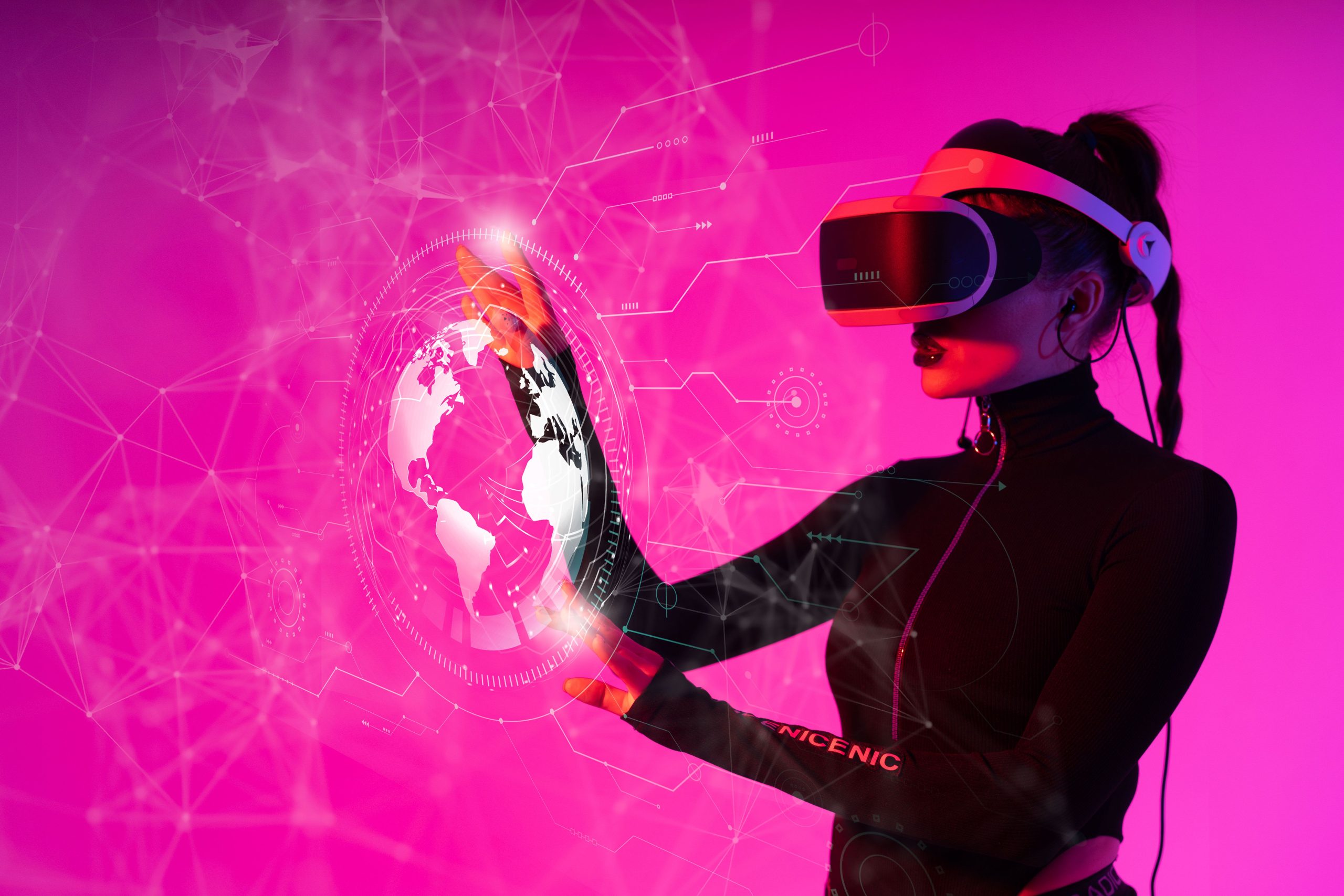
Movie magic has always relied on technology, from practical effects and miniature models to computer-generated imagery. Today, however, Hollywood is entering a new era where entire worlds can be created without leaving a soundstage. Virtual production has transformed filmmaking into one of the most technology-driven industries, combining computer graphics, game engines, robotics, and real-time rendering to create environments that look remarkably realistic on camera.
Instead of relying solely on green screens or expensive location shoots, filmmakers can now place actors inside immersive digital worlds that react instantly to camera movement and lighting. This technology is changing not only how movies are made but also how stories are imagined.
What is a virtual set?
A virtual set is a digital environment displayed on massive, high-resolution LED walls surrounding a film set. Rather than filming actors against a blank green background, the digital scenery is visible during production, allowing performers and filmmakers to see the world they are working in.
These environments are often created using advanced game engines capable of rendering detailed landscapes, cities, interiors, and visual effects in real time.
Unlike traditional visual effects that are added months later, virtual production combines physical sets with digital environments while filming is taking place.
The technology behind the illusion
Several technologies work together to make virtual production possible.
LED volume stages display enormous digital backgrounds with exceptional brightness and color accuracy. These screens produce realistic lighting that naturally reflects onto actors, costumes, and props.
Real-time rendering engines continuously update the digital environment as cameras move around the set. Instead of rendering each frame afterward, specialized software creates photorealistic images instantly.
Motion tracking systems monitor the exact position and movement of film cameras. As the camera moves, the digital background adjusts its perspective, creating the illusion that the environment extends far beyond the studio walls.
Together, these systems create realistic depth and perspective that are difficult to achieve using traditional green-screen techniques.
Why Hollywood is embracing virtual production
Virtual sets solve many challenges that have traditionally made filmmaking expensive and time-consuming.
Studios can recreate deserts, mountain ranges, futuristic cities, or historical locations without transporting hundreds of crew members across the world. This reduces travel costs while giving filmmakers greater creative flexibility.
Weather also becomes less of a problem. Rain, snow, or changing daylight no longer interrupt production because the environment inside the studio remains completely controlled.
Production schedules become more efficient, allowing multiple locations to be filmed within the same stage by simply loading different digital environments.
Real-time collaboration
One of the biggest advantages of virtual production is immediate feedback.
Directors, cinematographers, production designers, and visual effects artists can all view the finished environment during filming instead of waiting months for post-production. This allows creative decisions to happen instantly, reducing costly revisions later.
Actors also benefit because they can interact with visible landscapes rather than imagining environments that will only exist after editing.
Artificial intelligence and virtual production
Artificial intelligence is beginning to play a growing role in modern filmmaking.
AI can assist with generating background assets, improving facial animation, organizing production workflows, enhancing visual effects, and accelerating editing tasks. While AI does not replace filmmakers, it increasingly supports creative teams by automating repetitive technical work.
As AI tools continue developing, virtual production is expected to become even faster and more efficient.
The influence of game technology
One of the most surprising aspects of virtual production is its connection to the video game industry.
Modern game engines, originally developed for interactive entertainment, now power many virtual film environments. These engines generate highly detailed graphics in real time, making them ideal for cinematic production.
This crossover demonstrates how advances in one technology sector often create breakthroughs in another.
Beyond science fiction
Although virtual production is often associated with science fiction and fantasy films, it is now used across many genres.
Historical dramas, action films, television series, commercials, documentaries, and even live broadcasts increasingly rely on virtual environments to create locations that would otherwise be difficult, expensive, or impossible to access.
The technology is becoming a standard filmmaking tool rather than a niche innovation.
Sustainability benefits
Virtual production also offers environmental advantages.
By reducing travel, transportation of equipment, large outdoor crews, and repeated location construction, studios can lower the environmental impact of filmmaking.
Digital environments can also be reused and modified for future productions, reducing material waste associated with building multiple physical sets.
New careers in filmmaking
As virtual production expands, it is creating entirely new career opportunities.
Modern film productions increasingly require specialists in:
- Real-time computer graphics
- Software engineering
- Motion capture
- Virtual environment design
- Robotics
- Camera tracking systems
- Artificial intelligence
- Digital asset creation
This means filmmaking now combines artistic creativity with STEM disciplines such as computer science, engineering, mathematics, and physics.
Challenges remain
Despite its advantages, virtual production is not a complete replacement for traditional filmmaking.
Large LED stages require significant investment, specialized equipment, and highly trained technical teams. Physical sets, practical effects, and real-world locations still play an important role in creating authentic cinematic experiences.
Many filmmakers view virtual production as another creative tool rather than a substitute for established filmmaking techniques.
The future of Hollywood technology
As computing power continues to improve, virtual production is expected to become even more realistic and accessible. Higher-resolution displays, faster rendering systems, AI-assisted workflows, and more advanced robotics will continue expanding what filmmakers can accomplish inside a studio.
Future productions may blend physical and digital environments so seamlessly that audiences cannot distinguish where one ends and the other begins.
Final thoughts
Virtual production represents one of the biggest technological revolutions in modern filmmaking. By combining computer graphics, engineering, real-time software, and advanced display technology, Hollywood is redefining how stories are brought to life.
The science behind virtual sets demonstrates that today’s movies are no longer created through imagination alone—they are built through innovation. As technology continues advancing, the line between reality and digital creation will become even more invisible, opening new possibilities for storytellers around the world.