Create Account
Space has a reputation for being the ultimate long-term investment. Build a spacecraft, launch it into orbit, point it toward the universe, and let it collect discoveries that may transform our understanding of reality.
But even the most successful space missions eventually reach a final chapter.
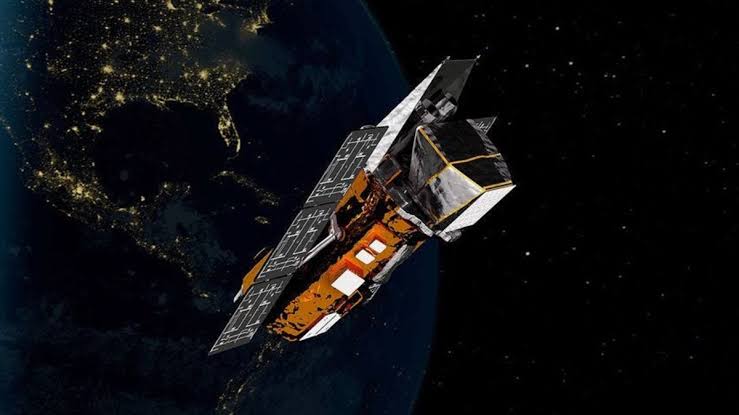
For NASA’s Neil Gehrels Swift Observatory, that chapter is arriving in spectacular fashion. After more than two decades orbiting Earth and investigating some of the universe’s most energetic events, Swift is expected to re-enter Earth’s atmosphere on November 4, 2026, according to NASA’s latest published prediction. Most of the spacecraft is expected to burn up during its descent, although some components may survive.
The observatory’s scientific mission has ended, but its legacy is far from over. Swift leaves behind an enormous archive of observations that researchers can continue studying for years, potentially finding new patterns and answers in data already collected.
Its final descent is also a reminder that space exploration involves more than launching sophisticated machines into the sky. It requires planning for what happens when those machines grow old, lose altitude, or can no longer perform their intended work.
A Two-Year Mission That Lasted Nearly 22 Years
Swift launched on November 20, 2004, with an ambitious assignment: study gamma-ray bursts, brief flashes of extraordinarily energetic radiation associated with some of the universe’s most violent events.
Its original primary mission was designed to last approximately two years. Instead, the observatory continued producing valuable scientific results for more than ten times that planned duration.
The spacecraft was renamed the Neil Gehrels Swift Observatory in 2018 to honor its first principal investigator, astronomer Neil Gehrels, who helped develop the mission.
Swift was built around a simple but demanding idea: when a cosmic explosion happens, scientists must react quickly. Some of these events fade so rapidly that waiting hours or even minutes can mean missing crucial evidence.
To solve that problem, Swift combined three instruments that could observe different types of radiation. Its Burst Alert Telescope detected gamma-ray bursts and estimated their locations. The spacecraft then rapidly redirected its X-ray Telescope and Ultraviolet/Optical Telescope toward the source to study the fading afterglow.
The observatory could send an alert to scientists on the ground within seconds of detecting a burst and reposition its other instruments rapidly enough to begin follow-up observations while the event was still unfolding.
In astronomy, that speed matters enormously. It can be the difference between knowing that an explosion occurred and understanding what caused it.
Chasing the Universe’s Most Powerful Explosions
Gamma-ray bursts, or GRBs, are among the most energetic explosions known. Long bursts are often associated with the collapse of massive stars and the formation of black holes. Short bursts can arise when compact objects such as neutron stars merge.
These events can release enormous amounts of energy over remarkably short periods. Yet their brief duration makes them difficult to study using observatories that cannot quickly change direction.
Swift helped change that situation.
NASA reported in October 2026 that the observatory had detected more than 2,000 gamma-ray bursts during its career. It also studied more than 1,400 supernova explosions, monitored active galaxies, observed stars being disrupted by black holes, and investigated objects much closer to home, including comets and asteroids.
One important milestone came in 2005, when Swift observed the afterglow of a short gamma-ray burst designated GRB 050509B. The burst itself lasted only about 0.03 seconds, but Swift’s rapid response allowed researchers to detect its X-ray afterglow.
That kind of observation helped scientists test theories about short gamma-ray bursts and their possible origins in neutron-star mergers.
The larger achievement was the method itself. Swift demonstrated how a space telescope designed to respond quickly could help scientists coordinate observations across the astronomical community.
A brief flash could trigger a chain reaction of research, with other observatories turning toward the same region of space to collect additional evidence.
Swift was not simply watching cosmic explosions. It was helping the rest of astronomy react to them.
Why One Telescope Needed Three Different Eyes
The name Swift suggests speed, but the observatory’s real strength came from combining speed with multiple wavelengths.
Visible light is only a small part of the electromagnetic spectrum. Gamma rays and X-rays can reveal extremely energetic processes, while ultraviolet and optical observations provide different clues about an object’s temperature, composition, surroundings, and evolution.
By observing an event in several wavelength ranges, scientists can assemble a more complete picture of what happened.
Imagine trying to understand a lightning storm using only a photograph taken after the flash. You might see the illuminated clouds, but you would miss much of the event itself. Now imagine a system that detects the flash, measures its changing energy, records what happens afterward, and quickly alerts other observers.
That is the kind of advantage Swift brought to high-energy astronomy.
Its observations helped researchers investigate the changing behavior of distant galaxies, the aftermath of stellar explosions, and the activity surrounding black holes. The spacecraft also developed into a flexible observatory for targets beyond its original mission.
NASA reported that Swift’s data had contributed to approximately 7,000 published scientific papers by the time the mission ended. Its archive contains nearly 22 years of measurements, including more than 1.5 million images from its ultraviolet and optical telescope.
The spacecraft may soon stop transmitting observations, but the information it gathered will remain available to researchers.
In science, a mission’s value is not measured only by how long its instruments operate. It is also measured by what scientists can learn from its results.
The Sun Helped Speed Up Swift’s Final Chapter
Swift’s end did not arrive because its scientific purpose had disappeared. Its orbit was becoming increasingly difficult to maintain.
Satellites in low Earth orbit experience atmospheric drag. Although the atmosphere is extremely thin at these altitudes, it still creates resistance. Over time, that resistance reduces a spacecraft’s orbital energy and causes it to descend.
Solar activity can make the situation more complicated.
When the Sun becomes more active, increased energy entering Earth’s upper atmosphere can cause the atmosphere to expand. That increases the amount of drag experienced by satellites in low orbit, accelerating their loss of altitude.
Swift experienced this problem as solar activity intensified, causing its orbit to decay faster than expected.
NASA and commercial partner Katalyst Space Technologies attempted to extend the observatory’s life through a planned robotic servicing mission. The goal was for a separate spacecraft, called LINK, to rendezvous with Swift, capture it, and raise it to a higher orbit.
The mission was an ambitious test of a capability that could become increasingly important as more satellites age in space.
However, LINK experienced spacecraft control problems, and the planned capture and orbit boost did not take place. The effort ended without extending Swift’s orbital lifetime.
Swift briefly resumed scientific observations, but its declining altitude eventually made normal operations impractical. NASA reported that the observatory conducted its final observation on October 20, 2026, and subsequently ended operations in preparation for re-entry.
The attempted rescue was unsuccessful in its central objective, but it offered experience with the difficult engineering and operational challenges involved in servicing an aging satellite.
That knowledge may help shape future missions designed to repair, refuel, reposition, or safely retire spacecraft.
Should We Be Worried About Falling Space Debris?
The idea of a satellite falling back to Earth can sound alarming. Spacecraft contain metal structures, electronics, instruments, and other components that do not necessarily disappear completely during atmospheric re-entry.
NASA expects most of Swift to burn up as it descends, but some pieces may survive. The agency has said the probability of harm to any individual on Earth is very low, while continuing to monitor the predicted re-entry.
That distinction is important. A low risk does not mean zero risk, and a prediction about a spacecraft’s re-entry time or location can carry uncertainty.
Swift’s relatively low orbital inclination also limits the possible re-entry region to latitudes between approximately 20.6 degrees north and 20.6 degrees south. NASA and the U.S. Space Force have been tracking its descent and updating their predictions as new information becomes available.
For most people, the event is not something that requires any special action. It is primarily a reminder that satellites are physical objects operating in a dynamic environment, not permanent fixtures in the sky.
Many spacecraft eventually re-enter Earth’s atmosphere. Others are moved to disposal orbits when their missions end. The appropriate approach depends on the spacecraft’s orbit, design, remaining capabilities, and the risks associated with its retirement.
The important part is planning ahead rather than waiting until a satellite becomes difficult to control.
The Growing Challenge of Space Traffic and Aging Satellites
Earth’s orbital environment has become increasingly busy. Governments, research organizations, and commercial companies operate satellites for communications, navigation, weather forecasting, Earth observation, and scientific research.
These systems support everyday activities, from checking weather forecasts to navigating roads and maintaining global communications.
But every spacecraft has a limited operational lifetime. Some fail because of hardware problems, some run out of fuel, and others gradually lose the ability to maintain their intended orbits.
As the number of satellites grows, managing their end-of-life stages becomes an important part of responsible space operations.
There are several related challenges.
First, operators need accurate tracking data to understand where satellites are moving and how their orbits are changing. Second, they need plans for preventing collisions and minimizing the creation of additional debris. Third, they need reliable ways to retire spacecraft that can no longer function safely.
Swift adds another dimension: the possibility of extending a valuable mission through in-space servicing.
If a satellite can be repaired or moved to a safer orbit, it may continue producing useful results instead of being abandoned. Yet servicing requires precise navigation, complex robotics, careful risk assessment, and spacecraft designs that may not have been created with future capture in mind.
Not every rescue attempt will succeed. The challenge is to learn from each attempt and develop better tools for future missions.
As humanity places more equipment in orbit, the ability to manage aging spacecraft will become just as important as the ability to launch new ones.
A Scientific Legacy That Will Outlive the Spacecraft
Swift’s final descent marks the end of its active mission, not the end of its scientific contribution.
Its observations are preserved in a public archive that researchers can use to investigate new questions. Future scientists may revisit old measurements with improved analytical methods, compare them with data from newer telescopes, or identify patterns that were not obvious when the original observations were made.
That is one of the most valuable characteristics of scientific missions: discoveries can continue long after the hardware stops working.
Swift also demonstrated the importance of rapid-response astronomy. A telescope that can identify an event and quickly examine its fading aftermath provides information that slower or less flexible instruments may miss.
As NASA considers how to maintain this capability in a post-Swift era, existing observatories and future missions may help fill parts of the gap. However, replacing Swift’s specific combination of instruments, rapid response, and long-term monitoring is not as simple as switching on another telescope.
The next generation of observatories will build on what Swift taught scientists, while facing their own engineering and operational challenges.
For now, one of NASA’s most productive space observatories is preparing to make its final journey through the atmosphere.
After nearly 22 years of chasing cosmic explosions, Swift leaves behind a remarkable scientific record and an important lesson: space missions do not last forever, but the knowledge they produce can.
The telescope’s final exit may be dramatic, but its greatest achievement is what remains after the spacecraft is gone.
References
- NASA Science — NASA’s Swift Mission Ends, Leaves Behind Scientific Bonanza
- NASA Science — NASA’s Swift Observatory to Re-Enter Atmosphere
- NASA — Swift Observatory and Mission Overview
- NASA — Updates on the Commercial Swift Boost Mission
- Reuters — NASA’s Swift Satellite Telescope Heads for Fiery Re-Entry 22 Years After Launch