Create Account
Science experiments usually begin with a question. What happens when two materials react? How does a machine learn to move? What happens when a substance gives off radiation? How can scientists explore an environment that is too dangerous, too hot, too contaminated, or simply too difficult for a person to enter?
For decades, scientists have answered those questions with laboratories, instruments and carefully controlled experiments. Now, another tool is becoming increasingly important: the robot.
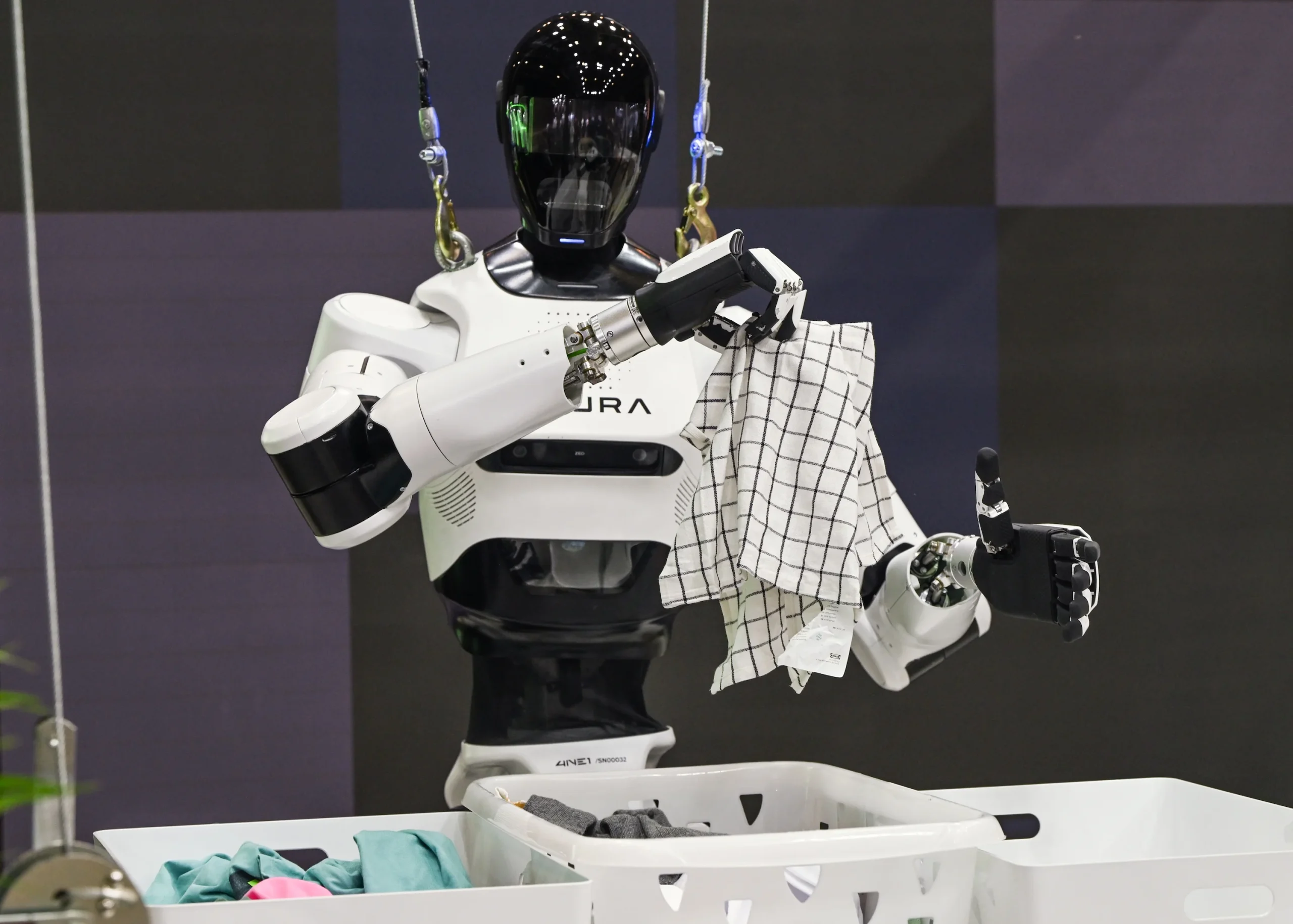
The newest generation of robots is moving far beyond the machines that simply repeat one action on a factory floor. Researchers are developing systems that can sense their surroundings, manipulate objects, collect information, navigate complicated environments and even help conduct scientific experiments. Some are humanoid, designed with two arms, two legs and human-like movement. Others have wheels, multiple legs or specialized equipment built for a very specific mission.
Together, they are changing what scientists can safely investigate.
One of the most interesting developments is happening inside laboratories. At Pacific Northwest National Laboratory, researchers have developed an AI system called AutoLabs that can translate a scientist’s experimental goals into instructions for laboratory robots. The goal is to reduce the amount of time researchers spend manually translating an experimental plan into machine-specific commands. According to the laboratory, traditional setup could require lengthy communication between scientists and engineers, while the new system is designed to help automate that process.
That may sound like a small improvement, but it points toward a much bigger idea: the laboratory itself can become partly automated.
Imagine a scientist wanting to test hundreds of combinations of materials. Instead of manually preparing every sample, measuring every result and repeating the process throughout the day, robotic systems can potentially perform many of those repetitive steps. Sensors can record what happens, computers can organize the results and AI systems can help researchers determine which experiment should happen next.
The scientist remains responsible for the questions and interpretation, but machines can increasingly handle portions of the physical work.
This is where science experiments and robotics begin to overlap.
A robot does not get tired after performing the same measurement for the hundredth time. It does not need to stand next to a dangerous experiment. It can be designed to operate in places where humans need protective equipment or where direct exposure would be unacceptable.
That becomes especially important when scientists are working with radioactive materials.
Radioactive elements are materials whose unstable atomic nuclei release energy as they transform. That energy can take the form of radiation, including alpha particles, beta particles and gamma rays. Some radioactive materials have important scientific, medical and industrial applications, but exposure to ionizing radiation can be hazardous, which is why radioactive environments require careful monitoring and protection.
Scientists therefore need ways to measure radiation without unnecessarily exposing people to it.
Robots can help.
Researchers have been developing robotic systems equipped with radiation sensors and imaging technology that can investigate contaminated or potentially radioactive environments. One recent research system combined a robot with a Compton camera and LiDAR to locate radioactive hotspots inside a nuclear facility. The system was able to identify radiation associated with cobalt-60 and map the location of the hotspot within a three-dimensional environment.
That is a remarkable example of science becoming physical.
The robot is not simply moving from one place to another. It is collecting scientific information about an environment that may be difficult or hazardous for a person to investigate directly. Its cameras and sensors become the robot’s scientific senses, allowing researchers to build a picture of what is happening from a safer location.
And researchers are taking that idea even further.
A 2026 study explored a multi-robot system designed to search for the source of a radioactive leak during a nuclear emergency. Rather than relying on a single robot, the system allows multiple robots to work together while accounting for the possibility that radiation can interfere with sensors. Researchers reported that their approach improved search efficiency compared with earlier methods in their experimental evaluations.
Think of it like a team of robotic explorers.
One robot gathers information. Another investigates a different area. Their measurements can be combined to help determine where the radioactive source may be located. Instead of sending people directly into an uncertain environment, scientists can first send machines.
This is one reason radioactive elements make such an interesting subject for young scientists. Radioactivity can seem mysterious because it cannot be seen with human eyes. A radioactive material does not necessarily glow or look different from an ordinary piece of matter. Scientists need specialized detectors to measure radiation and determine what is happening.
Robots can carry those detectors into places where human access is difficult.
That same principle applies far beyond nuclear science.
Humanoid robots are now being developed to operate in environments designed for humans. The idea is simple: if a robot has a human-like body, it may be able to use stairs, doors, tools, workstations and other infrastructure without requiring an entirely new environment.
But making a machine that looks human is much easier than making one that moves and thinks effectively.
A humanoid robot has to balance itself, understand its surroundings, coordinate multiple joints, manipulate objects and respond when something unexpected happens. Researchers are therefore using machine learning and other forms of AI to help robots learn movement rather than simply programming every motion individually.
Georgia Tech researchers recently demonstrated a machine-learning approach that allowed a two-legged robot to navigate surfaces including gravel, grass, hills and stairs. The researchers reported that their method was faster and less computationally expensive than leading approaches for training robotic controllers, while the robot was able to handle terrain that was not specifically included in its training.
That is important because the real world is not a perfectly controlled laboratory.
A robot might encounter a wet floor, a loose rock, an unexpected obstacle or a surface it has never seen before. If the machine can adapt rather than simply follow a memorized sequence, it becomes much more useful.
Recent humanoid robotics developments have also demonstrated just how quickly the field is moving. At the 2026 World Humanoid Robot Games in Beijing, the Tiangong Ultra humanoid robot completed 100 meters in 9.39 seconds, faster than Usain Bolt’s 2009 human world record. The performance was spectacular, although the robot also demonstrated an important limitation: speed does not automatically mean reliability or precision.
That distinction is critical.
A robot does not need to beat a human in a race to be scientifically useful.
In fact, some of the most valuable robots may be the ones that move slowly and carefully.
A robot designed to investigate radioactive contamination does not need to sprint. It needs to measure accurately. A laboratory robot does not need to look impressive. It needs to repeat an experiment consistently. A humanoid designed to help in a hospital, factory or research facility needs to understand its environment and interact safely with people.
The future of robotics may therefore be less about creating machines that look like superheroes and more about building machines that can perform useful tasks in the real world.
Humanoid robots are already being studied for applications involving inspection, manufacturing, environmental sensing and human-robot interaction. Researchers have even explored humanoid systems capable of combining cameras, environmental sensors and AI-based vision to navigate difficult environments and gather information.
This creates an exciting connection between robotics and the scientific method.
A good experiment involves observation, measurement, testing and evidence.
Robots can participate in all four.
They can observe through cameras and other sensors. They can measure temperature, movement, radiation, chemicals or environmental conditions. They can repeat controlled actions. And they can send the resulting data back to researchers.
The machine does not replace the scientist. It extends what the scientist can investigate.
That distinction is especially important when talking about AI.
AI is becoming increasingly useful in robotics because the physical world is complicated. A traditional computer program might tell a robot to move its arm a certain distance. An AI-assisted system can potentially help the robot recognize an object, understand its position, predict movement and determine how to interact with it.
In a laboratory, that could mean identifying a container before picking it up. In an industrial environment, it could mean recognizing an unfamiliar obstacle. In a radioactive environment, it could mean combining sensor information to help locate a source.
The robot becomes more than a programmed machine.
It becomes a scientific tool capable of responding to information.
There is another fascinating possibility: robots could eventually help scientists conduct experiments in environments that are simply impractical for humans.
Consider a damaged nuclear facility. A person entering such an environment may require protective equipment, radiation monitoring and carefully planned access. A robot can be designed specifically to enter the area first, collect measurements and identify potential hazards.
Or imagine a laboratory where hundreds of experiments need to be performed overnight. A robotic system could potentially continue working while researchers are away, collecting measurements for analysis the following morning.
The same idea could eventually apply to oceans, deserts, disaster zones, industrial facilities and even other worlds.
The more difficult the environment becomes, the more valuable robotic exploration can become.
That does not mean robots are ready to replace scientists. They are not. Current humanoids still have major limitations involving energy use, reliability, dexterity, autonomy and adaptability. Researchers and industry experts continue to point out that impressive demonstrations do not necessarily translate into dependable real-world performance.
That is actually one of the most important lessons in modern science and technology.
A demonstration is not the same thing as a finished solution.
A robot completing one impressive task does not mean it can perform that task safely every day in every environment. A machine learning model achieving a high laboratory score does not guarantee perfect performance in the real world. Scientists have to test, measure, repeat and improve.
In other words, robots themselves are becoming part of the experiment.
Researchers can ask: Can this robot climb the stairs? Can it identify an object? Can it detect radiation? Can it collect samples? Can it repeat an experiment accurately? Can it recover when something goes wrong?
Every question produces another experiment.
And every experiment produces more data.
That is what makes the intersection of science, robotics and AI so exciting. The future is not simply about robots becoming more human. It is about machines becoming better scientific partners.
A humanoid robot walking through a laboratory may look like something from science fiction, but the more interesting story is what it can actually do. It could carry equipment, manipulate instruments, inspect machinery or perform repetitive tasks. A specialized robot entering a radioactive environment may look less glamorous, but its ability to detect invisible radiation could be far more important.
The most useful robots may not be the ones that make the biggest spectacle.
They may be the ones that quietly go where humans cannot.
They may crawl into dangerous spaces, measure invisible forces, repeat an experiment hundreds of times, search for contamination, analyze an unfamiliar environment or collect information that would otherwise be difficult or dangerous to obtain.
And that brings us back to the heart of science.
Scientists ask questions about the world.
Experiments help them find answers.
Technology gives them new ways to ask those questions.
And robots may soon allow scientists to explore places, materials and situations that were once considered too difficult, too dangerous or too unpredictable to investigate directly.
The future laboratory may not look like the laboratories of the past.
It could have scientists working alongside AI systems, robotic arms conducting experiments, humanoid machines moving equipment, sensors constantly collecting information and specialized robots exploring environments that humans should never enter.
The exciting part is not that machines are becoming more like people.
It is that machines are giving people new ways to discover what the world is really doing.
References
Pacific Northwest National Laboratory — AI Helps Scientists Speak to Robots and Speed Up Experiments
ScienceDirect — Multi-Robot Autonomous Search for Radioactive Leakage Source
ScienceDirect — Robotic Detection of Radioactive Hotspots Using Compton Imaging and LiDAR